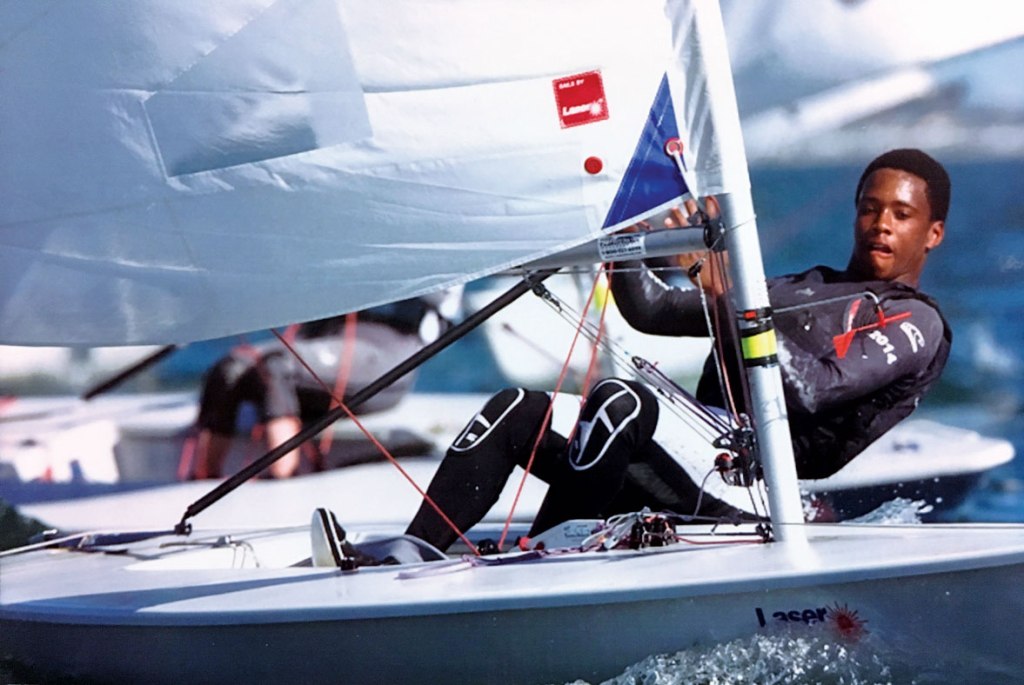
“One of the first things my coaches told me was just ‘keep going, don’t give up. There’s not many people like us in the sport, so you have to keep going.”
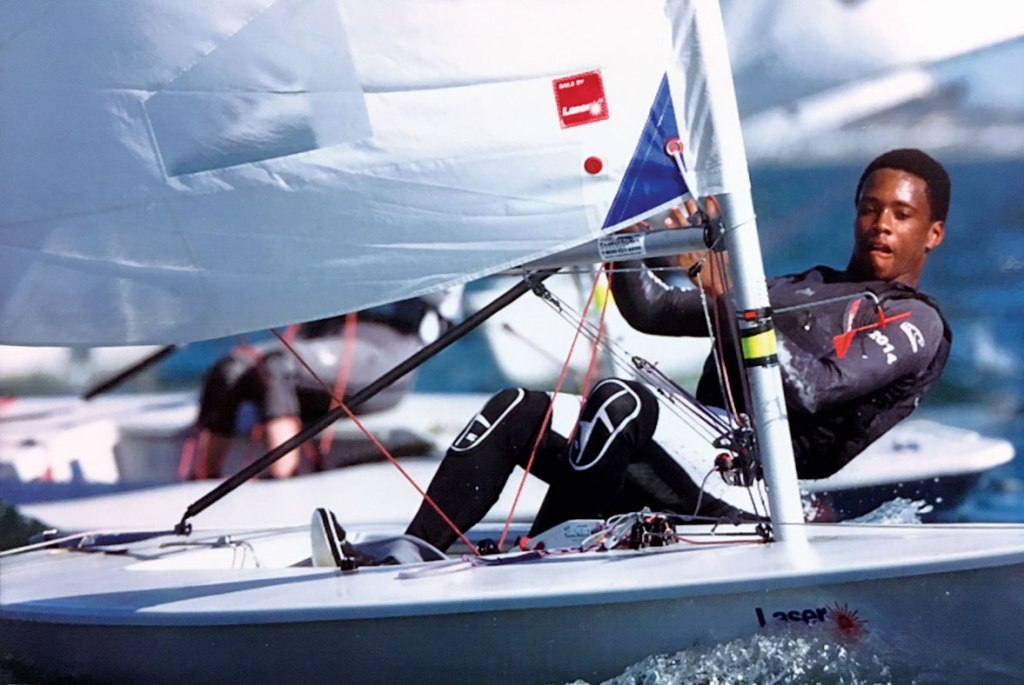
Thad Lettsome sat in a Tulane University dinghy on a brisk New Orleans morning. He had grown up across the Gulf of Mexico and the Caribbean Sea, in the small territory of the British Virgin Islands, constantly competing to try and get to exactly where he is right now. But for the first time in his career, the 21-year-old’s goal was to simply enjoy himself, not necessarily to win.
The school was celebrating their National Championship with an Alumni weekend, their first championship in the sport since 1986.
But even with the program’s 30 year drought, there is another event that takes historic precedent on the day. Lettsome, a skipper from the British Virgin Islands, became only the third Black person in the 21st century to win a Collegiate National Championship in sailing.
“It’s not something I’d even thought of outright,” said Lettsome. “Black people are a massive minority in all types of sailing, so I’ve been used to that.”
Growing up in the Caribbean, Lettsome was always surrounded by water, but not by sailing. Despite being surrounded by water, Caribbean communities are not consumed by the sport of sailing.
When Lettsome was 9 years old, his friends decided to go to a sailing camp on the island. Lettsome, simply wanting to hang out with his friends, decided to go with them.
After sailing camp, Lettsome was immediately hooked. He fell in love with every aspect of the sport: the freedom of being out in the water, the quick decision making, and no two tracks being the same. It enamored him; he knew it was exactly what he wanted to do.
Sailing’s reputation as an overwhelmingly white sport is not unearned. While the sport is becoming more inclusive, the demographic still remains incredibly homogenous. A 2020 nationwide survey of collegiate sailors found that 86.3% of sailors are white, as well as 95.8% of coaches, with less than 1% of sailors identifying as Black.
Being only one of very few collegiate Black sailors, Lettsome needed great coaches that understood what he was going through, and thankfully that’s exactly what occurred. One of his first coaches was Omari Scott, a former collegiate sailor who sailed at the only HBCU in the country with a sailing program, Hampton University. Having a Black coach around to guide and help him was crucial in Lettsome’s early development, and he says that it encouraged him to keep going.
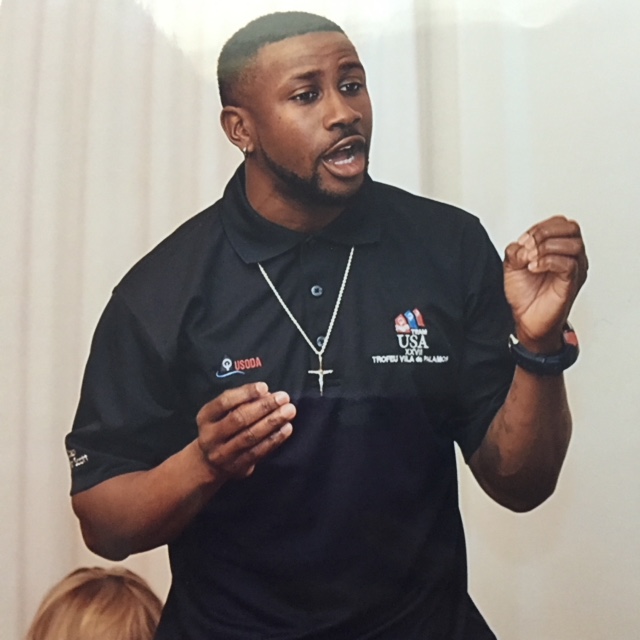
“One of the first things my coaches told me was just ‘keep going, don’t give up,’” said Lettsome. “There’s not many people like us in the sport, so you have to keep going. They made me understand that there’s not many of us, and the representation of us in the sport can easily be diminished by one person giving up.”
Both Lettsome and Scott attribute this lack of diversity almost entirely to the sport’s incredibly high financial barrier.
Despite Antigua having the perfect conditions to sail year round, and possessing incredibly talented sailors, a lack of resources has held back the community from producing great sailors for many years. Scott says he has seen numerous talented friends quit, because of the financial restraints of sailing, and he wants to help pave the way to making the sport more accessible.
“The only thing we don’t have is resources, we don’t have the money to invest in massive programs,” said Scott. “One of my big things, why I’m doing it, was the fact that I wanted to show other people that they were just like me. I have a lot of friends back home that were really good sailors, but they couldn’t go out and show it because of financial restrictions.”
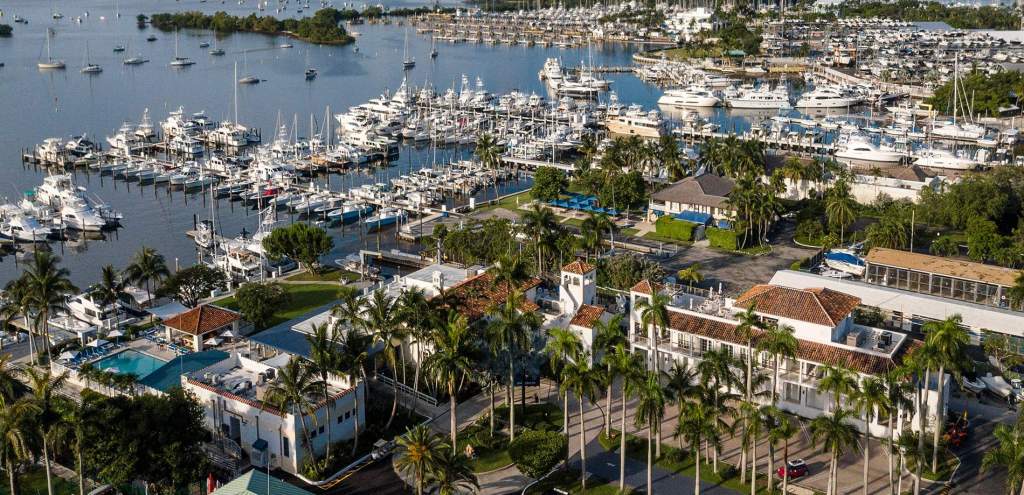
Scott grew up just a few minutes away from a yacht club on his home island of Antigua, and he started sailing when he was just six years old. The exclusive, expensive club is where most sailors begin their career, and they are one of the biggest contributing factors to the high barrier of entry in the sport
Coral Reef Yacht Club, where Scott works, has a membership fee of $25,000. This price is even before you factor in any equipment you might need, travel costs, or maintenance. This high cost at such a young age serves to exclude anyone who cannot afford it.
“The barrier of entry is just very high. It serves to exclude a lot of people; people who might not have the means or the time others do,” said Lettersome. “Everything with sailing is very expensive; it’s very time consuming.”
These financial restrictions aren’t just limited to the island either, they are inherent to the sport.
Beyond the financial barriers that keep sailing predominantly white, there are also cultural barriers. Blacks are an extreme minority of college sailors, and that number shrinks even more when it comes to college coaches.
According to Scott, this is a circular pattern. Black sailors are not encouraged to pursue the sport as much as white sailors are, so there are less Black sailors. Since there are less Black sailors, there is going to be an even smaller percentage of those that choose to become coaches.
He believes that this cycle needs to be broken at its root for things to change, saying that it all starts with Black kids seeing it as a predominantly white sport as they are growing up. The talent is there for Black sailors, but the sailing world needs to do a better job of getting them to fall in love and feel welcomed by it.
“The fact that the sport, even in the beginning when you are growing up, is predominantly white,” said Scott. “You’re not going to have a bunch of Black coaches, because when they are young they’re not encouraged to take part in the sport, to understand the sport, they don’t have a desire to coach the sport.”
It does not help when the few respected, Black coaches there are in the sport are often overlooked. Scott says that there have been times, even recently, where he felt that he had been overlooked for recognition he deserved.
“I’ve had situations where, maybe I wasn’t necessarily targeted, but things came up that I deserved based off of results, and I got overlooked,” said Scott. “You kinda ask yourself ‘why’? And after a while you start thinking ‘maybe it’s because I’m a different color,’ and no one should ever have to think that.”
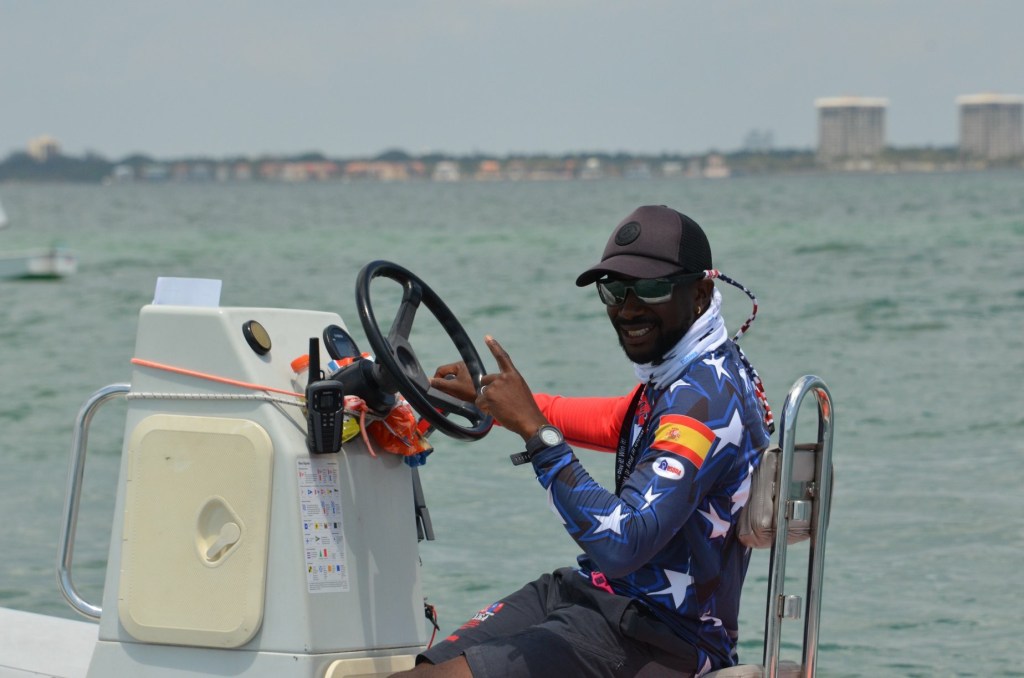
This discrimination may not be overt, but it is part of a larger culture that has historically dismissed and disregarded Black sailors. This expands to even disrespect in some extreme cases.
Bast says that the very conservative, very rich and very white culture of sailing leads to jokes targeting anyone who isn’t a straight, white male.
“Jokes about Black people not being able to swim, that type of thing, are things I’ve heard a few times,” said Lettsome. “I think it can be insecurity, but they are also so unfamiliar with seeing Black people in the sport, that’s just what their brain makes them say.”
The good news is that Lettsome believes that this attitude is beginning to dissipate. He doesn’t know if people are actually changing their beliefs, but with the sensitivity courses that are now mandated by US Sailing and World Sailing, things could change.
“I think we are moving in a direction where people are more sensitive and understanding towards racist sayings,” said Lettsome. “The amount of sensitivity training from World Sailing and US Sailing has definitely helped, if not to change people’s attitudes then at least be sensitive towards it.”
Fighting through this culture is something that both Scott and Lettsome feel is essential. They both feel a responsibility to other Black sailors to keep doing what they are doing, setting an example of what can be done in this sport.
As Lettsome sits ready to race against his school’s alumni in his dinghy, and continues celebrating his great achievement. Lettersome knows that there is a future where he is not the only Black person celebrating. He might only be the third Black national champion, but he hopes that he won’t be the last.




 journalistic portofolio
Leave a comment