Cade Gotta’s journey through a crisis-stricken league
By: Pablo Ocariz

In 2022, after eight years of playing in the Minor Leagues, blue-eyed San Diego native Cade Gotta was standing in front of national TV cameras. He was on the field in front of a packed stadium, in a country that at this moment had all its eyes on him.
After a seven game matchup in which his team came back from a 3-2 deficit, his team had won the most important sporting trophy in the nation for the first time in 10 years.
It was the biggest moment of his career.
“That was probably the biggest moment in my entire life,” said Gotta. “It was definitely the biggest thing I’ve done in my career, it was a huge moment for me.”
His team was not the Houston Astros, that year’s World Series champions. In fact, Gotta had never touched a Major League field. He wasn’t even affiliated with any MLB teams.
The Santa Fe High School alumni became a sporting hero very far from home; in the port city of Valencia, Venezuela, playing for Navegantes del Magallanes.
Venezuela has been in a state of economic and political crisis since 2014, when dictator Nicolas Maduro took power. Since then, the U.S. State Department has had a standing warning to not travel to the nation due to the state of the country, and it affected LVBP’s (the Venezuelan Professional Baseball League) ability to attract foreign stars.
“I would go so far as to say that this decade has been catastrophic for Venezuelan baseball,” said Rafael Chavero, former vice president of LVBP. “Before the specifics of the sanctions were announced, there was uncertainty of the extent of the sanctions so no foreign players came. Since people weren’t sure whether the league was owned by the government or what would be prohibited, MLB organizations preferred to simply not send players to Venezuela.”
But that did not stop Gotta, who despite warnings from the US government came to play ball in Venezuela in 2016.
“It was my first year in AA, and in the minor leagues we get paid nothing. A lot of times guys go play abroad, whether it be in Venezuela, Mexico or the Dominican Republic, and I got an offer from Venezuela,” explained Gotta. “A lot of people were telling me ‘don’t go’ because it’s very dangerous, and that the country was in a very bad situation. But I had like $10 in my bank account, so I was like ‘well, I gotta go’, and I’m really glad I did.”
Gotta’s rookie season in LVBP was with the Bravos in the island of Margarita, when he was still a part of the Tampa Bay Rays organization. He hit .270 and had a .704 OPS in his debut campaign.
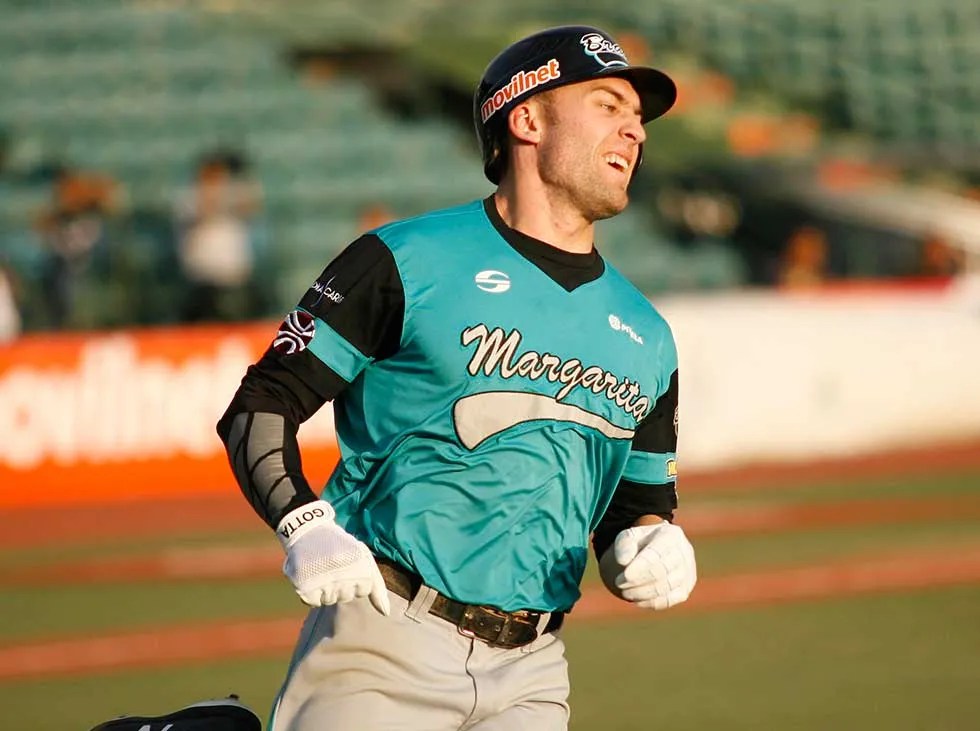
Since then, he has gone back to play in Venezuela every year. He played one more year in Margarita before making the switch to Venezuelan giants Magallanes, where he had a stellar 2019-20 campaign, hitting .386 and posting a 1.052 OPS, the highest mark in the league.
In his six years coming to the nation, Gotta has fallen in love with Venezuelan culture and baseball. But the realities of living under a dictatorship that has a failing economy still haunt the league, and the ability for Americans to play safely in it.
He Found Love With a Hopeless Place
Despite the political and economic turmoil in his time playing baseball in the South American country, Gotta still managed to fall in love with the culture.
“The fact that I’m one of the few Americans in the league has made me feel like kind of a fan favorite, which is incredibly cool,” he explained. “There are so many good people in Venezuela. Despite the economic disparity that there is, I have loved the treatment I’ve gotten from Venezuelans.”
Gotta’s affection for Venezuela has only grown in his seven year long stay in the country. In his time he has learned to speak Venezuelan Spanish from being in the club house and he has fallen in love with Venezuelan food, particularly the corn-based pancake known as a cachapa.
“I’m not sure how healthy they are, but I love cachapas, they are delicious,” he explained. “It’s even driven me to find good Venezuelan restaurants in the US, though they aren’t as good as in Venezuela.”
The food and language are nice for Gotta, but they are just the cherry on top of what keeps bringing him back to the country; baseball. Baseball culture is monolithic in Venezuela, with rivalry games like Magallanes vs. Leones del Caracas having sell out crowds and vibrant atmospheres.
“Venezuela has much more of a team concept, here it’s all about winning,” he said. “It was really refreshing to me [compared to the Minor Leagues], it made me crave coming back to try and finally win the championship,”
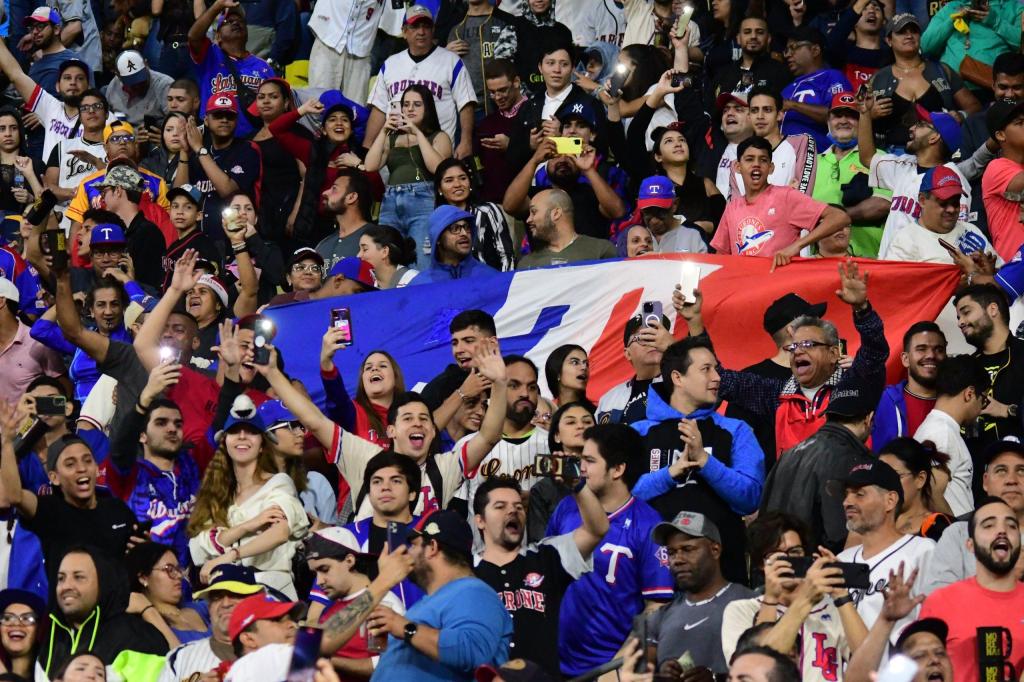
He’s not the only American to have fallen in love with Venezuela at this time, as former Caribes de Anzoategui pitcher Darryl Thompson has expressed a similar admiration and love for Venezuelan culture.
Despite stints playing in the Dominican and Mexican leagues, he only ever wanted to represent Venezuela in the Caribbean Series. The country where he has spent a majority of his baseball career, the first country he ever traveled to outside of North America, the country that has allowed him to extend his baseball career time and again.
After winning the title with Magallanes in 2022 and being crowned MVP, he finally got his wish.
“I had that in my mind for a while. I wanted to make the Serie del Caribe,” said Gotta. “It would have been unfitting to represent any other country. I always thought that the country I should represent in the tournament should be Venezuela, and I’m really glad that I got to represent [Venezuela].”
Political Realities
Professional baseball is a business and like every business in Venezuela, it has been affected by the dictatorship. Gotta’s Magallanes specifically had been one of two teams sanctioned by the state department for ties to Maduro’s government between 2019 and 2022.
“The sanctions brought an additional problem to the economic crisis, especially because in Venezuela there are at least two teams with direct ties to the dictatorship, in the Tigres de Aragua and Navegantes del Magallanes,” explained Chavero. “Even after sanctions were lifted on other teams, these two teams still had that association with the governments of their respective states.”
Despite the dictatorship’s crackdown on free speech, the world of baseball has been largely exempt. MLB players such as Ender Inciarte have publicly protested Maduro’s government and still been allowed to participate in LVBP.
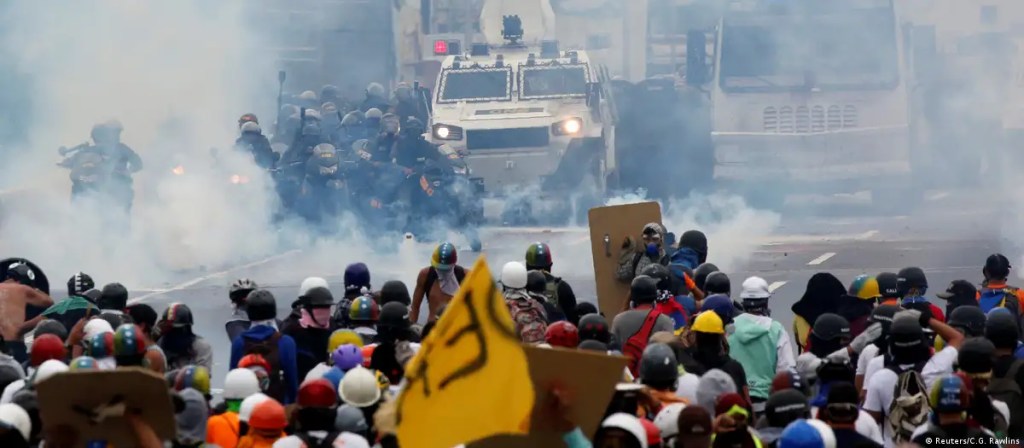
Even with this, one would expect the government-backed teams to not be so willing to accept dissent from its players. But despite playing for Magallanes, Gotta has still managed to voice his opinions on the injustices going on in the country.
“I definitely saw how sad it was for people to lose all their money and savings overnight. It was incredibly tough to watch. Some days, the 19 year-old teammates I had would only have enough money to buy one meal. They would eat half of it for lunch and half of it for dinner,” he said. “That was professional baseball players having to do that, it was much worse for the average citizen. I tried to help out when I could, whether that be with food or water, just do what I could. I saw a lot of tough things to see, it was really eye opening.”
Gotta also explained that he believes that the elections in Venezuela are illegitimate, stating that he believes that Maduro’s government fake the results. This belief is backed up by the OAS (Organization of American States), among other international organizations.
Chavero believes that the reason baseball players are allowed to speak out is largely attributed to the immense popularity of the sport in the nation. He explained that the government knows that the political cost of intervening with baseball and its players is simply too high.
“The government knows that baseball is too popular in Venezuela, and it would generate a lot of backlash from the Venezuelan public, so it is an area where they have been less oppressive.” he says. “Ironically, the dictatorship has the tolerance of a democracy, which it is not, exclusively when it comes to baseball.”
Like every other aspect of Venezuelan society, baseball has been deeply affected by the failing economy and repressive dictatorship, but still baseball has remained a constant that the government has not wanted to lose.
A League on the Bounceback
Despite a catastrophic decade for both LVBP and Venezuela as a whole, the league is coming off its best year in a long time. In 2022, sanctions were lifted for all LVBP teams, including those affiliated with the government. This coincided perfectly with Venezuela hosting the Serie del Caribe for the first time since 2014 in a brand new, state of the art stadium opened in Caracas.
“The 2022-23 season was a very different season for MLB. The sanction issue had been moved past, which resulted in a greater number of foreign ball players,” explained Chavero. “But really, the transcendent factor was that Venezuela managed to get the Serie del Caribe to be hosted in Caracas, which was also added to a great performance by the national team at the World Baseball Classic. All those factors combined for a season that had better players, a season that attracted a more significant number of fans, and a much better economic result for the league, even when compared to years prior to the crisis.”
Although exact numbers are hard to come by, the upswing of the league has started to be felt.
MLB superstars like Ronald Acuna Jr. and Andres Gimenez have returned to the league, marking the first time since the crisis began that players of that caliber have played in Venezuela, and every team had at least six MLB players this past season.
“It’s become really high quality baseball. Almost all of the Venezuelan natives [in MLB] now play,” said Gotta. “Every team has at least five or six guys in MLB, 10 in AAA, 10 in AA. Its become one of the top leagues in the world, above AAA.”
The facilities are also starting to resemble those of MLB. The aforementioned 40,000 seater stadium, named the Estadio Monumental de Caracas, is a genuinely world class facility.
“The stadium is a real behemoth, an unprecedented stadium in Venezuela. It’s a stadium that Venezuelan baseball fans had been dreaming about for years,” explained Chavero. “It’s a 40,000 seater, its first class. It has nothing to envy from an MLB stadium.”
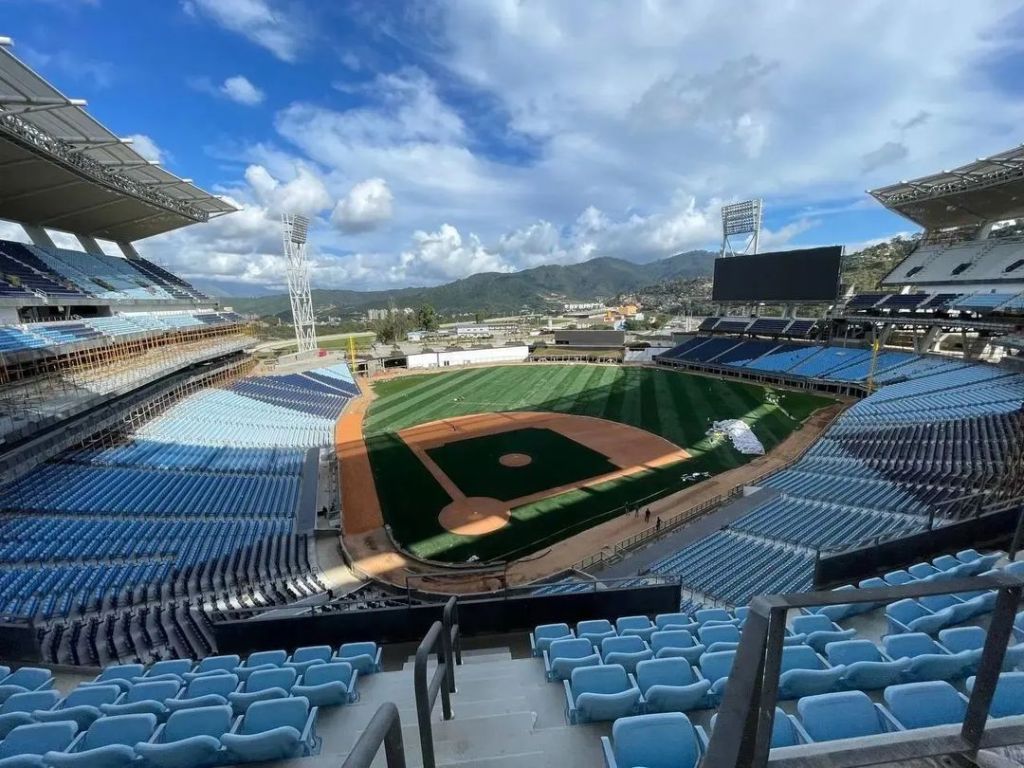
After its use in the Serie del Caribe, the Leones del Caracas have officially signed to make the stadium their new home, giving even further purpose and prestige to the already lauded stadium.
LVBP is on the bounce back. Everyone, from executives like Chavero, to players like Gotta can see that this year marks a new dawn for Venezuelan baseball.
What’s Next for Gotta?
After seven years in Venezuela and nine as a professional ball player, Gotta still believes he has gas left in the tank. His love for the culture is alive and well, and he wants to continue being part of the now flourishing league.
Following his stellar 2020-21 and 2021-22 seasons with Magallanes, he was not called back for the 2022-23 season. Instead, he played in the Dominican and Mexican leagues for the Aguilas Cibaenas and Tecolotes de los Dos Laredos respectively.
He continued his good form in Mexico, posting an .871 OPS, before a disappointing winter campaign in Santiago where he only managed to his OPS was over .200 lower at .615.
Despite a mixed year following his championship, no one can deny the success and impact that Gotta has had in his time in Venezuela.
He was the first American to win championship MVP since Mike Romano in 2004 and he is one of only three Americans to represent Venezuela in the Serie del Caribe since the crisis began in 2014 (Daryl Thompson, Logan Darnell). His legacy in Venezuela is secure, and the Magallanes faithful is likely to never forget his contributions to the team.
“I’m really glad and proud that I got to play in Venezuela,” said Gotta. “Hopefully I can do it again in the coming years.”


 journalistic portofolio
Leave a comment